


Conversation Starters for Kids Who Answer in One Word
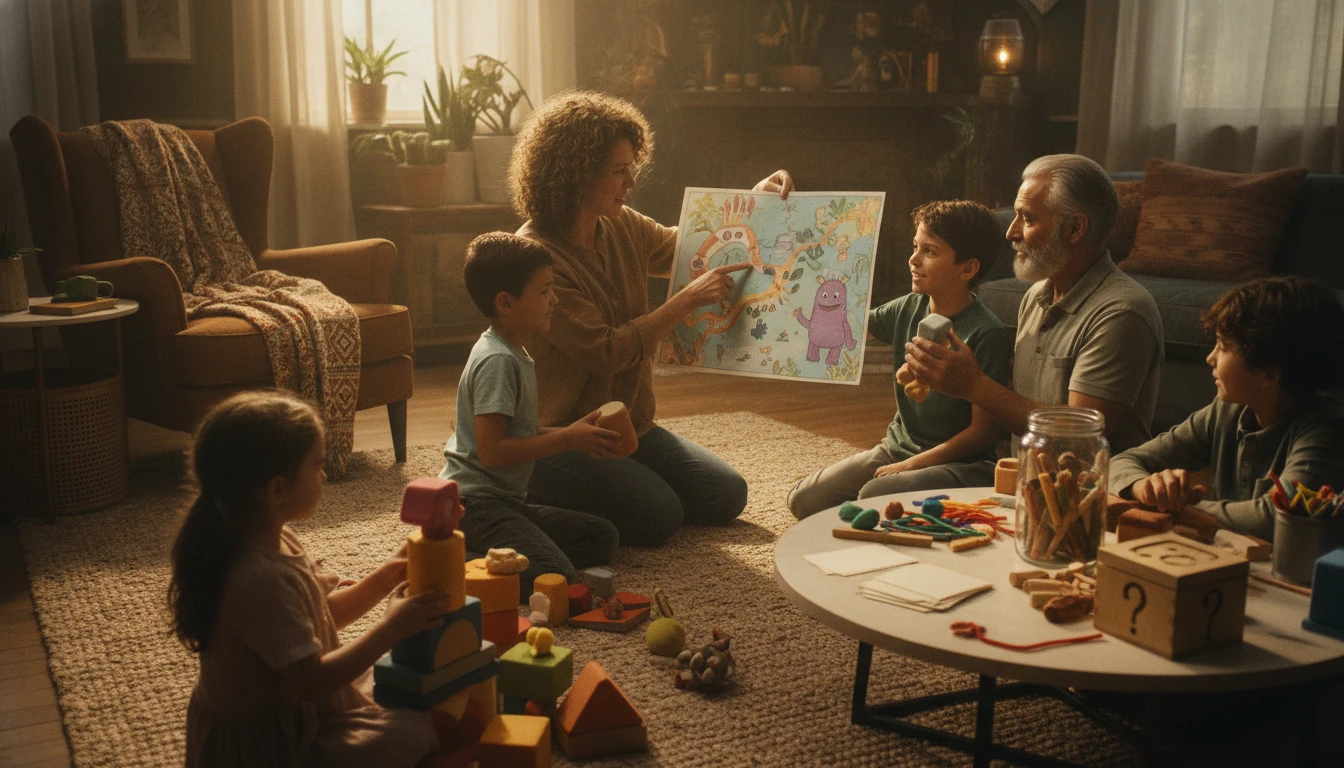
What are good conversation starters to use with kids who give one-word answers?
When a child answers with “fine,” “nothing,” or “okay,” the goal isn’t to force a longer reply—it’s to make it easier to talk. The best conversation starters are specific, sensory, and choice-based, so your kid can grab onto something concrete instead of searching for the “right” answer.
Try “tell me about” questions with a clear target
Broad questions (“How was school?”) invite broad answers. Swap them for prompts that point to a moment:
“Tell me about the best part of recess.” “Tell me about something that surprised you today.” “Tell me about a time you felt proud in class.”
Use either/or questions to open the door
Choices reduce pressure and still create conversation. After they pick, ask a gentle follow-up:
“Was your day more boring or more busy?” “Did you work with people or mostly solo?” “Was lunch more fun or more annoying?” Then: “What made it that way?”
Ask for details that don’t feel like interrogation
Kids often talk more when the question is about a “thing,” not their performance:
“What was the funniest thing someone said?” “What did your teacher write on the board that you still remember?” “If today had a soundtrack, what song would it be?”
Use future-focused and imagination prompts
These can feel safer than rehashing a tough day:
“What are you hoping happens tomorrow?” “If you could change one rule at school, what would it be?” “What would you teach if you were the teacher for a day?”
Make it a shared moment, not a quiz
Conversation often flows better side-by-side—during a snack, in the car, while folding laundry. Offer a small story first (“My meeting was long, but one funny thing happened…”) and then invite theirs.
For more practical ways to build connection and reduce shutdowns, visit this parent-child communication guide.
FAQ
How do you respond when your child shuts down during conversations?
Lower the pressure and name what you see: “Looks like talking feels hard right now.” Offer two options—talk later or do something together—then circle back when they’re calmer.
















Leave a comment